
Initializing Digital Excellence
Initializing Digital Excellence
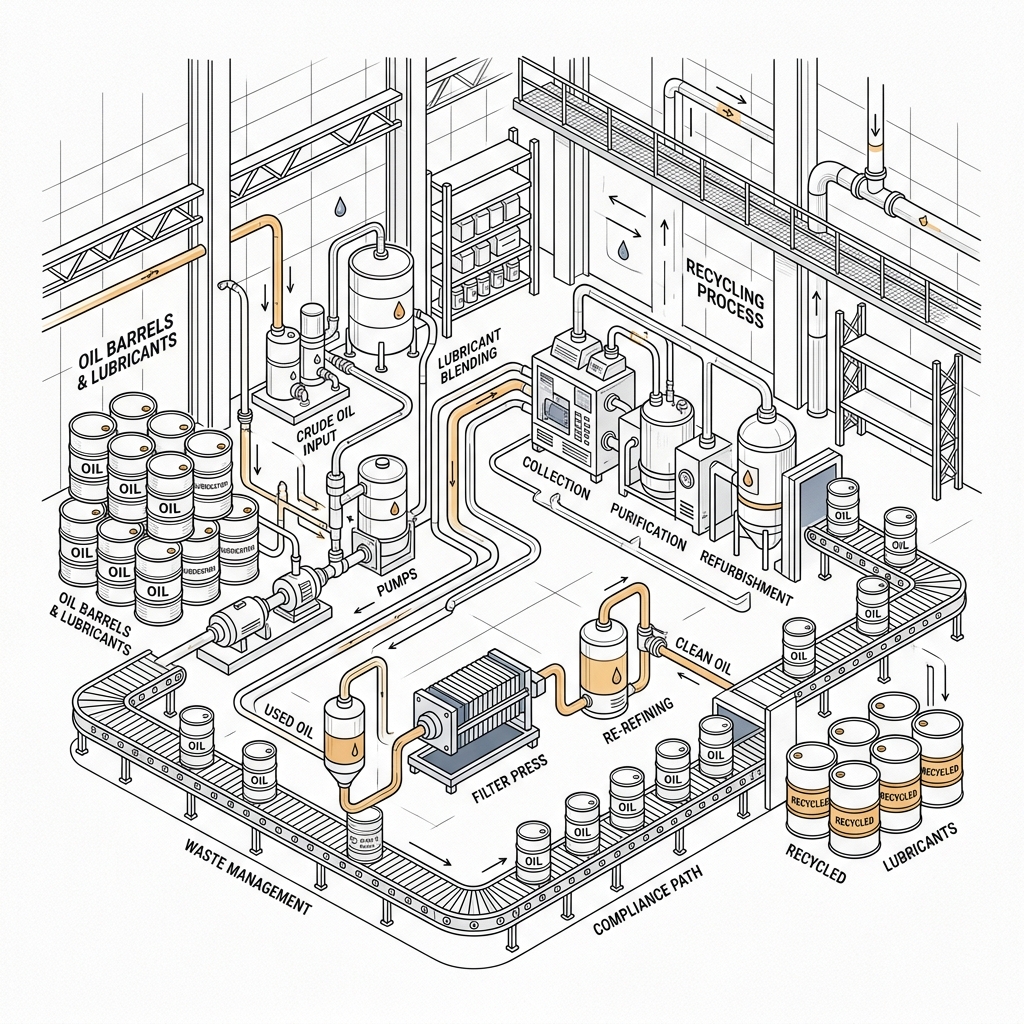
Automate collection tracking, recycler certification,
and CPCB annual returns for lubricant oil obligations.
Used oil EPR is one of India's newest and most rapidly emerging compliance frameworks. Lubricant oil manufacturers and importers are now required to take responsibility for the collection and re-refining of used oil generated from their products — under the Hazardous and Other Wastes Rules. Registration on CPCB's portal is mandatory.
India consumes approximately 3–3.5 million metric tonnes of lubricant oil annually. A large proportion is disposed of illegally, causing significant damage. CPCB is now making lubricant producers financially and operationally responsible for organised collection and re-refining.
Companies manufacturing engine, gear, hydraulic, or transformer oil domestically
Entities importing lubricant oils or oil-containing equipment into the Indian market
Authorised facilities that process used oil into base oil or fuel products
Companies blending or compounding base oils into finished lubricants
Entities importing base oil for lubricant formulation are covered under the importer definition
Hazardous and Other Wastes Rules — provisions for Used Oil EPR. Regulated by CPCB.
usedoilepr.cpcb.gov.in — registration, obligation calculation, and certificate management.
Percentage of total lubricant oil placed in Indian market in the preceding year.
Re-refining Certificates & Co-processing/Energy Recovery Certificates.
Credits tradeable on CPCB ETP — pricing is emerging as the market develops.
Filed on CPCB used oil portal. Quarterly collection data maintained with re-refiner invoices.
Environmental Compensation · Registration suspension · ₹10 lakh–₹50 lakh penalties.
Purchase limited to current liability + prior years + 10%. No cross-entity transfers.
India consumes ~3–3.5 million metric tonnes of lubricant oil annually.
The used oil EPR portal is live and registration is now mandatory for all lubricant producers. Avoid legal compensation and business blocks.
Most manufacturers are still assessing obligation scope and the methodology for collection targets.
Authorised re-refiner capacity is limited — finding registered partners with genuine certificates is challenging.
Used oil is generated in remote locations far from authorised collection points, complicating formal recovery.
Informal sector handles most recovery through illegal blending — formal channels require active network building.
Re-refining, co-processing, and energy recovery certificates have different regulatory weightings.
Matching data from hundreds of small points against re-refiner invoices and CPCB IDs takes weeks.

EcoTrace tracks data from dispersed sources and manages the growing network of authorised re-refiners.
Calculates annual used oil collection targets based on lubricant volumes — per product type and entity.
Register and manage partners — tracking CPCB numbers, processing capacity, and certificate status.
Map and track used oil sources like workshops and plants — linked to authorised re-refiners with invoices.
Separate tracking for re-refining, co-processing, and energy recovery — with their specific regulatory weightings.
Real-time view of collection achieved — state-wise and partner-wise — with shortfall alerts and EC calculation.
Complete CPCB used oil portal annual return — collection data, certificates, and EC calculation in one click.
Alerts when certificate shortfall × market price crosses risk threshold — enabling proactive ETP purchases.
Connects to your ERP or sales system to pull lubricant volumes — auto-calculating targets without manual entry.
Join leading lubricant manufacturers and blenders. Automate collection tracking and CPCB annual returns on EcoTrace.